Weekly Article · Week 5
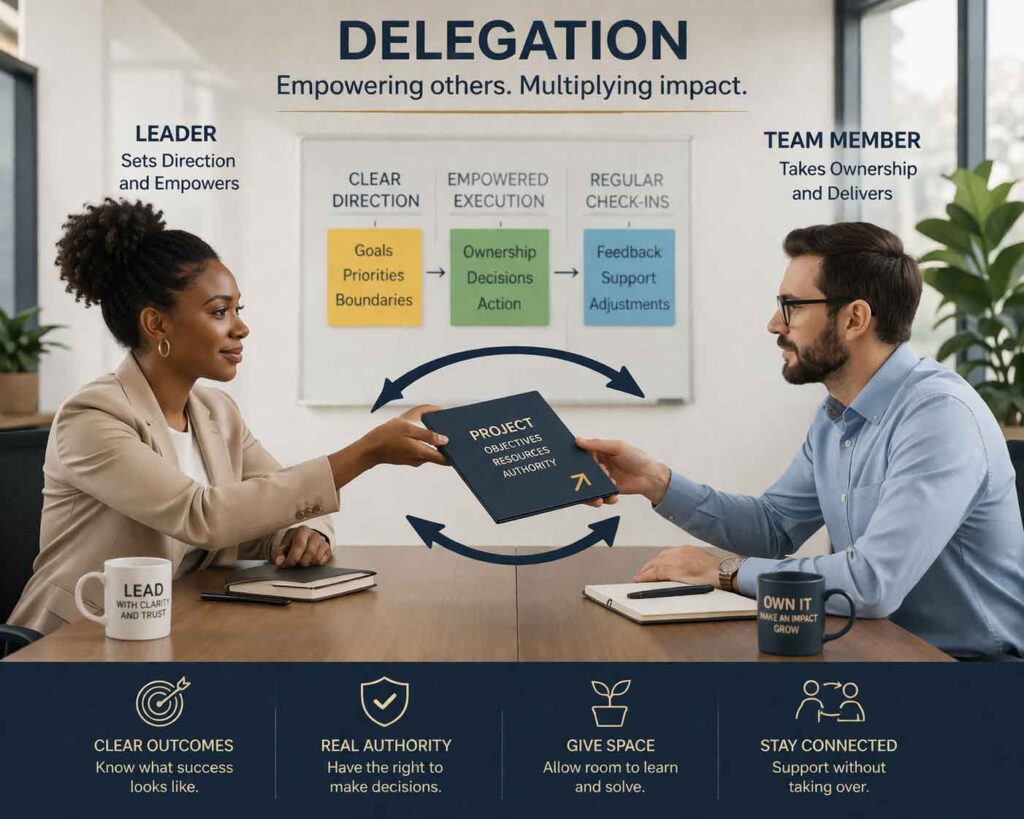
Why Delegation Matters in the European Workplace
Every leader in Germany and across Europe faces the same invisible ceiling. It is not budget constraints, market conditions, or talent shortages. It is the stubborn belief that you are the only one who can do it right.
Delegation is the most discussed yet poorly practiced leadership skill in European business culture. Why? Because it feels like a loss. When you hand off a task you have mastered, you trade competence for uncertainty. You exchange the satisfaction of completion for the anxiety of watching someone stumble through your carefully honed process.
But here is what the ceiling conceals: Your greatest contribution is not what you can do. It is what you can enable others to achieve.
The leaders who break through are not those who work hardest. They are the ones who build systems where their expertise replicates, scales, and ultimately becomes unnecessary.
In the German business context, where precision and quality carry exceptional weight, delegation takes on unique importance. DAX corporations, Mittelstand companies, and startups across Hamburg, Berlin, Munich, and Frankfurt all struggle with this same challenge. How do we maintain the standards German industry is famous for while developing the next generation of leaders?
The Three Traps That Block Delegation in German Leadership
Trap 1: The Competence Comfort Zone
You have spent years becoming exceptional at something. Delegating it feels like abandoning your identity. This hits hard for founders, engineers, and technical experts who built reputations on specific skills. The German emphasis on thoroughness makes this trap even deeper.
The shift: Your new expertise is developing others. The satisfaction of a job well done transforms into the deeper fulfillment of watching someone surpass your original capabilities.
Trap 2: The Time Investment Illusion
“I do not have time to teach someone. It is faster to do it myself.”
This is mathematically false over any meaningful timeframe. A task taking you 2 hours might take 6 hours to delegate properly. But once delegated, that task returns 100+ hours annually to your calendar. The break-even point usually arrives within weeks, not years. For busy European managers juggling EU regulations and market pressures, this time, math is critical.
Trap 3: The Perfectionism Prison
If they do not do it exactly your way, it is wrong.
Except it is not. Your way emerged from your specific context, constraints, and cognitive style. Their way, different but effective, might actually suit current conditions better. The goal is not replication. It is outcome achievement.
Delegation Training for European Managers: A Four-Level Framework
Level 1: Directive Delegation
“Do exactly this, in exactly this way.”
Use for crises, brand-new team members, or tasks with zero tolerance for deviation. Safety protocols and regulatory compliance in EU markets often require this approach.
The risk: Creates dependency. Team members wait for instructions rather than developing judgment.
Level 2: Coaching Delegation
“Here is the outcome I need. Let us discuss your approach.”
Use for developing capability while maintaining quality standards. You retain decision rights but explain your reasoning, inviting questions and alternative perspectives.
The magic: This is where learning happens. The conversation itself builds the team member’s strategic thinking. This approach resonates well in German leadership culture, where development is valued.
Level 3: Consultative Delegation
“You decide. I want to understand your thinking before you execute.”
Use for team members with demonstrated competence. They own the solution. You provide a safety net. This builds confidence while managing risk on high-stakes decisions common in European corporate environments.
Level 4: Full Autonomy
“You own this completely. I trust your judgment.”
Use for proven performers. Your role shifts to resource provider and obstacle remover. The only reporting needed is on exceptions or completion.
What to Delegate: The ICE Method for German Leaders
Not everything should be delegated. Use this filter:
I – Impact: Does this task directly leverage your unique strategic value? If yes, keep it. If no, consider delegation.
C – Competence: Could someone else reach 80% of your effectiveness with proper training? If yes, delegate.
E – Enjoyment: Do you find energy and meaning in this work? Sometimes you keep tasks simply because they bring you alive. That is valid. But be honest: are you confusing comfort with passion?
The delegation sweet spot: High competence requirement (proves your value as a teacher), low strategic uniqueness (does not require your specific vision), and energy-neutral or draining (frees you for higher-impact work).
Executive Coaching for Delegation: Making It Stick
Before Delegation
- Define success explicitly. What does “done well” look like? Include metrics, deadlines, and decision-making authority levels.
- Assess readiness honestly. Does this person have the skills, bandwidth, and support systems? If not, what is your development plan?
- Prepare for the learning curve. Build in time for questions, mistakes, and iteration.
During Delegation
- Transfer context, not just tasks. Explain the why behind the work. Understanding purpose enables better judgment when unexpected situations arise.
- Establish check-in rhythms. Too frequent equals micromanagement. Too sparse equals abandonment. Match frequency to task complexity and person experience.
- Create explicit permission to fail. Not catastrophically, but sufficiently to learn. “I expect you will need 2-3 attempts to get the rhythm. That is normal.”
After Delegation
- Evaluate outcomes, not methods. Did they achieve the goal? If yes, how they got there is their choice.
- Debrief thoroughly. What worked? What was harder than expected? What would they do differently? This converts experience into expertise.
- Celebrate publicly. Acknowledging delegated success reinforces the behavior for everyone.
Leadership Development in Europe: What Delegation Reveals
Delegation is a mirror. It exposes your fears, your need for control, your tolerance for ambiguity, and your trust in others.
When you struggle to delegate, you are not really worried about their competence. You are confronting your own replaceability. You are facing the question: If they can do this without me, what is my value?
The answer transforms your leadership: Your value is multiplying capability throughout your organization. You are no longer the person who does the important work. You are the person who ensures the important work gets done, brilliantly, by dozens of hands you shaped.
That is not diminishment. That is legacy.
Corporate Training for Delegation: The 30-Day Challenge
Week 1: Audit your calendar. Identify 5 hours of weekly work that meets the ICE criteria.
Week 2: Select one task and one person. Have the delegation conversation using the framework above.
Week 3: Resist rescue impulses. When they struggle, ask “What do you need?” rather than “Here is what to do.”
Week 4: Evaluate results. Celebrate progress. Plan your next delegation.
Team Building Through Delegation: Final Thoughts
The leaders we remember, those who build organizations that outlast them, share one trait: they made themselves unnecessary. They created cultures where excellence did not depend on their presence, where their ideas lived in the DNA of dozens of leaders they developed.
Delegation is not about reducing your workload. It is about expanding your impact beyond the limits of your own hands.
For European business leaders, from Hamburg to Munich, from startups to DAX corporations, mastering delegation is not optional. It is the path to sustainable growth in an increasingly complex market.
The best time to start was when you had your first team member. The second-best time is today.
Ready to transform your leadership? Explore executive coaching and corporate training programs designed for European managers at Halane Consultancy and Training Center in Hamburg.
Keywords: delegation training Germany, leadership development Europe, executive coaching Hamburg, corporate training Europe, management consulting Germany, team building Europe, leadership skills DAX companies, Mittelstand leadership development, delegation skills for managers, European business leadership
Ask most employees what they think of team building and watch their face. There’s usually a flicker of something: not quite dread, but close. A memory of a ropes course. A trust fall. An afternoon of “fun” activities that felt anything but. And yet, organisations across Germany and Europe continue to invest in these experiences year after year, wondering why the team dynamic back at the office looks exactly the same on Monday morning. As a team building consultancy working with companies from Hamburg to across the European continent, we see this cycle constantly.
The issue isn’t team building itself. The issue is what most organisations mistake for it. A shared experience can be enjoyable. It can even be memorable. But enjoyment and memory are not the same as trust, and trust is not the same as effective workplace collaboration. Real team cohesion is built through something far less glamorous: honest conversations, shared accountability, and the gradual, deliberate practice of working through disagreement without it becoming personal. That is what genuine corporate team building looks like, and it is very different from a day out of the office.
The most effective team development programmes across Europe share a common thread: they address the actual dynamics that hold teams back. Conflict avoidance, communication breakdowns, and unclear roles. The assumption that silence means agreement. These aren’t problems you can solve with a cooking class. They require structured, facilitated team building workshops that help teams see their own patterns clearly and develop the specific skills to change them. Particularly in Germany’s diverse, internationally connected business environment, intercultural communication training has become one of the most requested and impactful interventions we deliver.
One of the most striking moments I’ve witnessed in a professional team building workshop came during a conflict resolution session with a leadership team in northern Germany. Two senior managers who had been quietly undermining each other for months, both convinced the other was the problem, were asked to describe, in front of the group, what they each needed from the other to do their best work. The room went very still. What followed was one of the most honest conversations either of them had ever had at work. Nothing dramatic. No resolution in an afternoon. But a beginning. And sometimes a beginning is everything.
Effective team building isn’t an event. It’s a process, one that requires skilled facilitation, honest diagnosis, and a genuine commitment from leadership to address what’s actually getting in the way. At Halane Consultancy, our team building workshops in Hamburg and across Europe are built around exactly this: practical, evidence-based programmes that help teams understand how they really work, and give them the tools to work better. If your team, whether in Germany, across the EU, or spanning multiple European countries, could use more than a day out, we’d love to talk.
Conflict Resolution
Structured workshops that help teams surface, understand, and work through disagreement before it quietly becomes dysfunction.
Communication Clarity
Practical sessions focused on how teams actually communicate, specifically where messages get lost, where assumptions take over, and how to fix both.
Intercultural Collaboration
Building the awareness and skills that help diverse, cross-cultural teams work together with greater understanding and less friction.
The One Leadership Habit That
Ask most employees what they think of team building and watch their face. There’s usually a flicker of something: not quite dread, but close. A memory of a ropes course. A trust fall. An afternoon of “fun” activities that felt anything but. And yet, organisations across Germany and Europe continue to invest in these experiences year after year, wondering why the team dynamic back at the office looks exactly the same on Monday morning. As a team building consultancy working with companies from Hamburg to across the European continent, we see this cycle constantly.
The issue isn’t team building itself. The issue is what most organisations mistake for it. A shared experience can be enjoyable. It can even be memorable. But enjoyment and memory are not the same as trust, and trust is not the same as effective workplace collaboration. Real team cohesion is built through something far less glamorous: honest conversations, shared accountability, and the gradual, deliberate practice of working through disagreement without it becoming personal. That is what genuine corporate team building looks like, and it is very different from a day out of the office.
The most effective team development programmes across Europe share a common thread: they address the actual dynamics that hold teams back. Conflict avoidance, communication breakdowns, and unclear roles. The assumption that silence means agreement. These aren’t problems you can solve with a cooking class. They require structured, facilitated team building workshops that help teams see their own patterns clearly and develop the specific skills to change them. Particularly in Germany’s diverse, internationally connected business environment, intercultural communication training has become one of the most requested and impactful interventions we deliver.
One of the most striking moments I’ve witnessed in a professional team building workshop came during a conflict resolution session with a leadership team in northern Germany. Two senior managers who had been quietly undermining each other for months, both convinced the other was the problem, were asked to describe, in front of the group, what they each needed from the other to do their best work. The room went very still. What followed was one of the most honest conversations either of them had ever had at work. Nothing dramatic. No resolution in an afternoon. But a beginning. And sometimes a beginning is everything.
Effective team building isn’t an event. It’s a process, one that requires skilled facilitation, honest diagnosis, and a genuine commitment from leadership to address what’s actually getting in the way. At Halane Consultancy, our team building workshops in Hamburg and across Europe are built around exactly this: practical, evidence-based programmes that help teams understand how they really work, and give them the tools to work better. If your team, whether in Germany, across the EU, or spanning multiple European countries, could use more than a day out, we’d love to talk.
Conflict Resolution
Structured workshops that help teams surface, understand, and work through disagreement before it quietly becomes dysfunction.
Communication Clarity
Practical sessions focused on how teams actually communicate, specifically where messages get lost, where assumptions take over, and how to fix both.
Intercultural Collaboration
Building the awareness and skills that help diverse, cross-cultural teams work together with greater understanding and less friction.
The One Leadership Habit That
Ask most employees what they think of team building and watch their face. There’s usually a flicker of something: not quite dread, but close. A memory of a ropes course. A trust fall. An afternoon of “fun” activities that felt anything but. And yet, organisations across Germany and Europe continue to invest in these experiences year after year, wondering why the team dynamic back at the office looks exactly the same on Monday morning. As a team building consultancy working with companies from Hamburg to across the European continent, we see this cycle constantly.
The issue isn’t team building itself. The issue is what most organisations mistake for it. A shared experience can be enjoyable. It can even be memorable. But enjoyment and memory are not the same as trust, and trust is not the same as effective workplace collaboration. Real team cohesion is built through something far less glamorous: honest conversations, shared accountability, and the gradual, deliberate practice of working through disagreement without it becoming personal. That is what genuine corporate team building looks like, and it is very different from a day out of the office.
The most effective team development programmes across Europe share a common thread: they address the actual dynamics that hold teams back. Conflict avoidance, communication breakdowns, and unclear roles. The assumption that silence means agreement. These aren’t problems you can solve with a cooking class. They require structured, facilitated team building workshops that help teams see their own patterns clearly and develop the specific skills to change them. Particularly in Germany’s diverse, internationally connected business environment, intercultural communication training has become one of the most requested and impactful interventions we deliver.
One of the most striking moments I’ve witnessed in a professional team building workshop came during a conflict resolution session with a leadership team in northern Germany. Two senior managers who had been quietly undermining each other for months, both convinced the other was the problem, were asked to describe, in front of the group, what they each needed from the other to do their best work. The room went very still. What followed was one of the most honest conversations either of them had ever had at work. Nothing dramatic. No resolution in an afternoon. But a beginning. And sometimes a beginning is everything.
Effective team building isn’t an event. It’s a process, one that requires skilled facilitation, honest diagnosis, and a genuine commitment from leadership to address what’s actually getting in the way. At Halane Consultancy, our team building workshops in Hamburg and across Europe are built around exactly this: practical, evidence-based programmes that help teams understand how they really work, and give them the tools to work better. If your team, whether in Germany, across the EU, or spanning multiple European countries, could use more than a day out, we’d love to talk.
Conflict Resolution
Structured workshops that help teams surface, understand, and work through disagreement before it quietly becomes dysfunction.
Communication Clarity
Practical sessions focused on how teams actually communicate, specifically where messages get lost, where assumptions take over, and how to fix both.
Intercultural Collaboration
Building the awareness and skills that help diverse, cross-cultural teams work together with greater understanding and less friction.
The One Leadership Habit That
Ask most employees what they think of team building and watch their face. There’s usually a flicker of something: not quite dread, but close. A memory of a ropes course. A trust fall. An afternoon of “fun” activities that felt anything but. And yet, organisations across Germany and Europe continue to invest in these experiences year after year, wondering why the team dynamic back at the office looks exactly the same on Monday morning. As a team building consultancy working with companies from Hamburg to across the European continent, we see this cycle constantly.
The issue isn’t team building itself. The issue is what most organisations mistake for it. A shared experience can be enjoyable. It can even be memorable. But enjoyment and memory are not the same as trust, and trust is not the same as effective workplace collaboration. Real team cohesion is built through something far less glamorous: honest conversations, shared accountability, and the gradual, deliberate practice of working through disagreement without it becoming personal. That is what genuine corporate team building looks like, and it is very different from a day out of the office.
The most effective team development programmes across Europe share a common thread: they address the actual dynamics that hold teams back. Conflict avoidance, communication breakdowns, and unclear roles. The assumption that silence means agreement. These aren’t problems you can solve with a cooking class. They require structured, facilitated team building workshops that help teams see their own patterns clearly and develop the specific skills to change them. Particularly in Germany’s diverse, internationally connected business environment, intercultural communication training has become one of the most requested and impactful interventions we deliver.
One of the most striking moments I’ve witnessed in a professional team building workshop came during a conflict resolution session with a leadership team in northern Germany. Two senior managers who had been quietly undermining each other for months, both convinced the other was the problem, were asked to describe, in front of the group, what they each needed from the other to do their best work. The room went very still. What followed was one of the most honest conversations either of them had ever had at work. Nothing dramatic. No resolution in an afternoon. But a beginning. And sometimes a beginning is everything.
Effective team building isn’t an event. It’s a process, one that requires skilled facilitation, honest diagnosis, and a genuine commitment from leadership to address what’s actually getting in the way. At Halane Consultancy, our team building workshops in Hamburg and across Europe are built around exactly this: practical, evidence-based programmes that help teams understand how they really work, and give them the tools to work better. If your team, whether in Germany, across the EU, or spanning multiple European countries, could use more than a day out, we’d love to talk.
Conflict Resolution
Structured workshops that help teams surface, understand, and work through disagreement before it quietly becomes dysfunction.
Communication Clarity
Practical sessions focused on how teams actually communicate, specifically where messages get lost, where assumptions take over, and how to fix both.
Intercultural Collaboration
Building the awareness and skills that help diverse, cross-cultural teams work together with greater understanding and less friction.
The One Leadership Habit That
Ask most employees what they think of team building and watch their face. There’s usually a flicker of something: not quite dread, but close. A memory of a ropes course. A trust fall. An afternoon of “fun” activities that felt anything but. And yet, organisations across Germany and Europe continue to invest in these experiences year after year, wondering why the team dynamic back at the office looks exactly the same on Monday morning. As a team building consultancy working with companies from Hamburg to across the European continent, we see this cycle constantly.
The issue isn’t team building itself. The issue is what most organisations mistake for it. A shared experience can be enjoyable. It can even be memorable. But enjoyment and memory are not the same as trust, and trust is not the same as effective workplace collaboration. Real team cohesion is built through something far less glamorous: honest conversations, shared accountability, and the gradual, deliberate practice of working through disagreement without it becoming personal. That is what genuine corporate team building looks like, and it is very different from a day out of the office.
The most effective team development programmes across Europe share a common thread: they address the actual dynamics that hold teams back. Conflict avoidance, communication breakdowns, and unclear roles. The assumption that silence means agreement. These aren’t problems you can solve with a cooking class. They require structured, facilitated team building workshops that help teams see their own patterns clearly and develop the specific skills to change them. Particularly in Germany’s diverse, internationally connected business environment, intercultural communication training has become one of the most requested and impactful interventions we deliver.
One of the most striking moments I’ve witnessed in a professional team building workshop came during a conflict resolution session with a leadership team in northern Germany. Two senior managers who had been quietly undermining each other for months, both convinced the other was the problem, were asked to describe, in front of the group, what they each needed from the other to do their best work. The room went very still. What followed was one of the most honest conversations either of them had ever had at work. Nothing dramatic. No resolution in an afternoon. But a beginning. And sometimes a beginning is everything.
Effective team building isn’t an event. It’s a process, one that requires skilled facilitation, honest diagnosis, and a genuine commitment from leadership to address what’s actually getting in the way. At Halane Consultancy, our team building workshops in Hamburg and across Europe are built around exactly this: practical, evidence-based programmes that help teams understand how they really work, and give them the tools to work better. If your team, whether in Germany, across the EU, or spanning multiple European countries, could use more than a day out, we’d love to talk.
Conflict Resolution
Structured workshops that help teams surface, understand, and work through disagreement before it quietly becomes dysfunction.
Communication Clarity
Practical sessions focused on how teams actually communicate, specifically where messages get lost, where assumptions take over, and how to fix both.
Intercultural Collaboration
Building the awareness and skills that help diverse, cross-cultural teams work together with greater understanding and less friction.
The One Leadership Habit That